
Champaign County 72-Hour Release Method
There is no separate official Champaign County 72-hour released-person feed. The workable county method is to open the Sheriff's Public Documents archive and inspect three consecutive Corrections Daily Reports. Each report summarizes a prior activity date and may separately list people scheduled under “Releasing Today.”
Call the result a three-report review. The county does not label it a rolling 72-hour list, and the documents do not name everyone counted as released. That distinction is vital around weekends, when someone may look for a single Monday catch-up list that does not exist. The reports can reveal release volume, type, and selected scheduled names across the period, while a release sheet remains the better person-level proof.
Review Champaign County Three-Day Releases
Begin with dates, not names. A report's file date, activity date, and generation time can differ, so the right three documents must be chosen before interpreting a gap. Keep each source open until the person's custody path is clear.
- Open the current report and note the stated activity date and report generation time.
- Return to Public Documents and open the two prior consecutive Daily Reports. Use actual dates rather than assuming the first three links cover the desired span.
- Record total releases, each release-type count, and every “Releasing Today” name and date from all three files. Do not infer names from unnamed totals.
- Search the Sheriff portal with the person's full first and last name. Current absence needs another source before it can be called a release.
- Read the court docket for a release order, dismissal, sentence completion, probation, or transfer instruction. Obtain the actual order when a short docket label is unclear.
- Call Corrections at 217-384-1243 or submit a Sheriff records request for actual release date, time, type, and destination when the online record is incomplete.
For activity limited to the newest report, the Released Last 24 Hours page gives the narrower same-day process. That view avoids pulling older reports when the event is known to be recent.
Champaign County Release Archives
The official Sheriff report archive is the core source for a manual three-day review. It also contains other corrections reports and dated sheriff documents, so verify the report title and date before using a link.
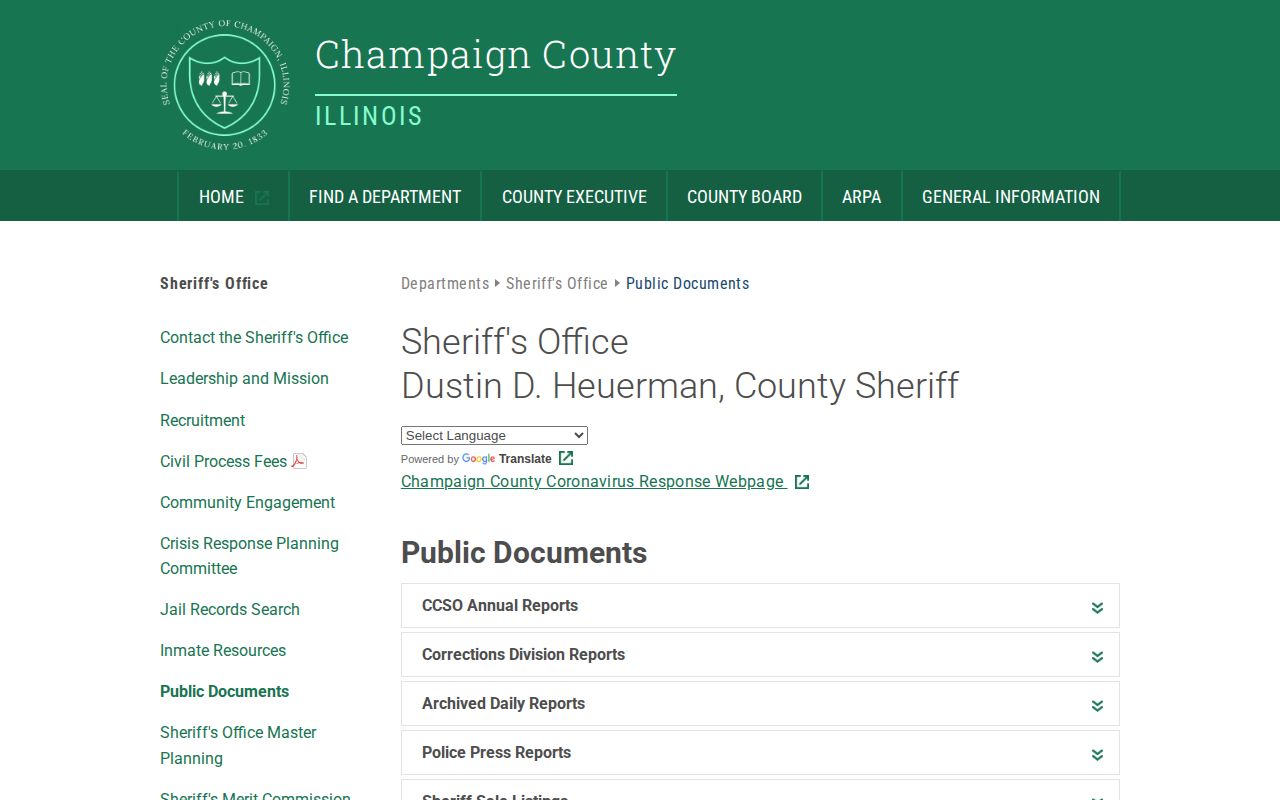
The archive view supports date-by-date research, but its presence does not create a formal retention guarantee or a complete released-person index.
Champaign County Three-Day Report Fields
Every report supplies operational facts rather than a full person-level release register. Comparing the same fields across three dates reveals trends and release categories, but it does not fill in missing names.
| Field | Three-day use and limit |
|---|---|
| Report and activity date | Places each document in sequence and prevents counting the wrong day. |
| Facility population | Gives daily jail context, not proof about a specific person's status. |
| Bookings and arrests | Shows intake work during each period, separate from exits. |
| Total releases | Allows a daily count comparison without identifying every person. |
| Release-type counts | Separates local categories, including transfers that continue custody elsewhere. |
| Releasing Today | Lists selected scheduled names and dates, not completed release times. |
A Sheriff booking/release sheet can provide the missing person-level layer. A focused request should identify the person and seek the actual exit time, release reason, authorizing order, and destination or receiving authority. The court file explains why the exit was authorized; the sheriff record shows when and how the jail acted.
Champaign County Weekend Release Gaps
A three-day range matters most when the search crosses a weekend, holiday, or delayed check. Observed Daily Reports were generated near the start of the business day, but Champaign County does not guarantee an exact publication minute. The report may therefore summarize activity that occurred before the person searching first saw it online.
Release processing, court entries, the jail portal, VINE ingestion, and PDF publication run on separate timelines. A Friday court order may be followed by later jail processing. A scheduled weekend departure may not be proven by the next available “Releasing Today” line. Rather than assume the missing update means continued custody or release, check the report's activity date and confirm the completed action.
Holidays need the same care. Choose three consecutive activity dates, not simply three documents displayed next to one another. If one date is missing from the archive, call Corrections or request the underlying record instead of treating the gap as a day with no releases.
Why Champaign County Releases Vanish
The archive has many dated 2026 reports, but no published promise states how long each PDF remains online. A report available today may not be a permanent record-access route. Preserve the dated URL for a current inquiry and request the underlying release sheet when lasting proof matters.
The newer jail portal has a different limit: it requires both first and last name. It cannot browse everyone released over three days, and a missing result does not state what happened. The person may have returned to the community, transferred to IDOC, moved to another county, entered treatment, or shifted to federal or immigration custody. This roster and archive mismatch is why a named 72-hour check needs more than one county page.
- Scheduled release
- A planned departure that still requires completion of jail processing.
- Actual release
- The recorded time the jail completed its custodial action.
- Transfer
- A handoff that ends county jail custody while another agency or placement takes over.
- Retention
- The period records remain available; no formal online archive period was found here.
Verify Champaign County Release Records
When the three-report review does not answer a named inquiry, move from quick clues to direct evidence. Search the Circuit Clerk record for the legal order. Call the jail for current operational status. Then ask Sheriff records for a booking/release sheet or records sufficient to show the date, time, type, and destination of the exit.
Illinois VINE is useful when registration occurs while the custody record is active. Its alert reflects a participating agency's reported status change, not the end of every possible hold. IDOC is the correct route when the county record shows transfer to state custody or when the person later appears on parole or mandatory supervised release. A fully discharged state record may require IDOC's archived Record Search rather than its ordinary public search.
The Champaign County named-person release search brings those county, court, state, VINE, federal, and records-request paths together. Use it when the question is where one person went, not how many release events appeared across three reports.
Read Champaign County Release Outcomes
The local taxonomy includes Agency No Charge, Book and Release, Notice to Appear, Ordered Released, Probation, Released on Pre-Trial Release, and Served Sentence of Incarceration. Each label gives a more exact reason than the broad word “release.” Keep that label when comparing the Daily Report with the court and sheriff records.
Other entries describe continued custody or placement. A transfer to another state or county authority, release to another agency, or transfer to mental-health treatment ends the Champaign jail stay without proving a community return. Follow the receiving authority named in the direct record. If the next stop is IDOC, an incarcerated result confirms continued state custody; a parole status confirms prison release with supervision still in force.
A current jail roster result means the person remains listed in county custody. Roster absence is weaker evidence. The strongest local combination is the final court order plus a Sheriff record documenting the completed exit and destination.
Champaign County Corrections Context
The Sheriff's corrections overview describes the county operation behind the daily records. It provides local context for intake, detention, and release work, while the dated Daily Reports remain the sources for the specific three-day period.
The overview should not be substituted for the three dated reports or a named person's release sheet. It explains the system; those records establish the event.